COP27: What is the importance of the Climate Summit for the future of the planet

The meeting will take place from November 6 to 18 in Egypt, and takes place amid rising fuel costs and diplomatic tensions.
World leaders will discuss actions to combat climate change at the United Nations Climate Change Conference in Egypt, better known as COP27.
President-elect Luiz Inácio Lula da Silva (PT) should attend the event, following an invitation from Egyptian president Abdel Fatah al-Sissi.
The summit comes after a year of climatic disasters and temperature records in various parts of the world.
Understand the importance of the Climate Summit for the future of the planet.
What is the UN Climate Summit?
The United Nations climate conferences are held every year for governments to agree on measures to limit the rise in global temperature.
These meetings are called COPs, which stands for "Conference of the Parties". The parties are the countries that signed the original UN climate agreement (United Nations) in 1992.
COP27 is the 27th annual UN meeting on climate. It will take place in Sharm el-Sheikh, Egypt, from November 6 to 18.
Why are COP meetings necessary?
The planet is warming due to emissions produced by humans, mainly through the burning of fossil fuels such as oil, natural gas and coal.
Global temperature has already risen by 1.1°C and is heading towards a high of 1.5°C, according to UN climate scientists, the Intergovernmental Panel on Climate Change (IPCC).
If the temperature rises 1.7 to 1.8°C above 1850 levels, the IPCC estimates that half of the world's population could be exposed to life-threatening heat and humidity.
To prevent this, 194 countries signed the Paris Agreement in 2015, pledging to "make efforts" to limit global temperature rise to 1.5°C.
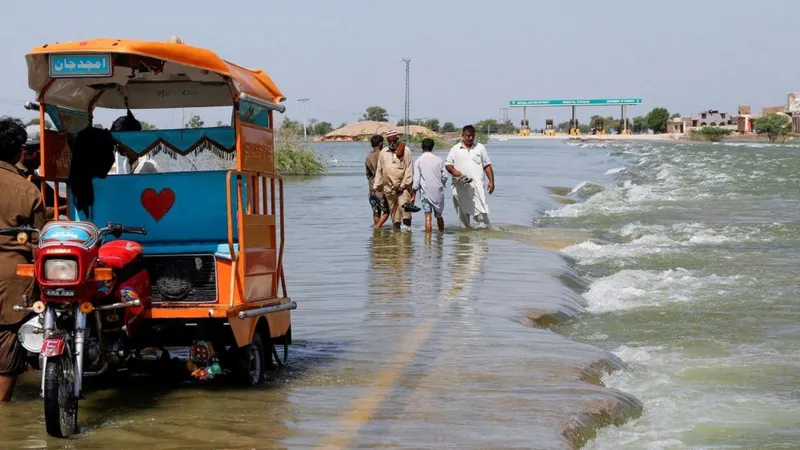
Floods in Pakistan this year are a 'alert' to the world about the threat of climate change, according to experts
Who will be at COP27?
More than 200 governments are invited.
However, some leaders of major economies, including Russian President Vladimir Putin, are not expected to attend. But country delegates are still expected.
Other countries, including China, have not confirmed whether their leaders will participate.
Host Egypt urged countries to put aside their differences and "show leadership".
Environmental NGOs, community groups, think tanks (civil society organizations that seek to influence public policy), businesses and religious groups will also participate.
Why will COP27 be in Egypt?
This will be the fifth time that a COP has been held in Africa.
The governments of the region hope to draw attention to the serious impacts of climate change on the continent. The IPCC states that Africa is one of the world's most vulnerable regions to climate change.
Currently, an estimated 17 million people face food insecurity in East Africa — the part of the continent bordering the Indian Ocean — because of drought.
However, the choice of Egypt as the headquarters generated controversy.
Some human rights and climate advocates say the Egyptian government prevented them from attending because they criticized the country's record on guaranteeing rights.
What will be discussed at COP27?
Prior to the meeting, countries were invited to submit ambitious national climate plans. Only 25 countries have done so — so far.
COP27 will focus on three main areas:
- emission reduction
- Helping countries prepare for and deal with climate change
- Secure technical support and funding for developing countries for these activities
Some issues not fully resolved or covered at COP26 will be resumed:
- Loss and Damage Financing — money to help countries recover from the effects of climate change, rather than just preparing for it
- Establishing a global carbon market — to price the effects of emissions on products and services globally
- Strengthen commitments to reduce coal use
There will also be themed days for talks and announcements focused on issues such as gender, agriculture and biodiversity.
Are points of friction expected?
Funding has been an issue in the climate negotiations.
In 2009, developed countries pledged to donate US$100 billion a year through 2020 to developing countries to help them reduce emissions and prepare for climate change.
The target was not met and postponed to 2023.

But developing nations are also asking for payments for "loss and damage"—compensation for the climate impacts they are now facing.
An option for payments was excluded from the climate talks in Bonn, Germany's COP26 city, after resistance from wealthier nations, who feared they would be forced to pay damages for decades.
The European Union agreed that the discussions be resumed at COP27.
the jargon
- Paris Agreement: The Paris Agreement united all the world's nations — for the first time — in a single agreement to fight global warming and reduce greenhouse gas emissions
- IPCC: The Intergovernmental Panel on Climate Change examines the latest climate change research
- 1.5°C: Limiting the rise in global average temperature to 1.5°C — relative to pre-industrial times — will avoid the worst impacts of climate change, scientists say
How will we know if the Summit was successful?
Depends who you ask.
Developing countries will want, at the very least, financing for damages to be an item on the agenda. They will also push to have a set date to start receiving payments.
Developed nations will seek more commitment from large developing countries — such as China, India, Brazil, Indonesia and South Africa — to move away from coal, the most polluting of fossil fuels.
There are also commitments from last year — on forests, coal and methane emissions — that more countries can join.
However, some scientists believe that world leaders have left their decisions for too late, and no matter what is agreed at COP27, it will not be possible to limit global warming to the 1.5°C limit.


No comments:
Post a Comment