CBN BRASIL

Tuesday, April 28, 2015

The Real Cost of Vietnam


AGENT ORANGE

The commemoration of the end of the Vietnam War this week in 1975 will be lost on many Americans who are too young to recall the tumultuous events of the Indochina wars. (We also bombed Laos and Cambodia mercilessly in the same period.) The iconic photographs of the U.S. helicopter about to lift off from the roof of the U.S. embassy in Saigon, with desperate Vietnamese scrambling to board, as the final reckoning are symbolic but also misleading. The image of the "pitiful, helpless giant" misleads because the U.S. military had almost completely withdrawn many months before after having laid waste to Vietnam, north and south, for nearly a decade.
What we will hear this week is heartbreaking: 56,000 American soldiers and marines killed in the war, tens of thousands more permanently scarred. They were young men, boys really, some pressed into service by the draft, but many misled into enlisting in a morally bankrupt war. Even then, so many gave, in Lincoln's words, the last full measure of devotion. It is the deepest tragedy and sadness of my generation.
What we won't hear so much this week is the story of the Vietnamese, the burned out villages, the bombed dams, the five million people displaced, the promiscuous use of napalm and Agent Orange (which still ravages Vietnamese), the three million dead.
I wrote about this in The Deaths of Others: The Fate of Civilians in America's Wars. Here I adapt a small part of one chapter to convey what happened to the natives of Vietnam at the hands of the U.S. military and its allies. It was, like all wars, an orgy of psychotic violence. We have yet to learn the lessons of Indochina. But we need to try.
............
The air war within South Vietnam accounts for a large number of the civilians killed there. Jonathan Schell, one of the most insightful independent journalists in the war, described a mid-1967 tour of the province of Quang Ngai, along the coast and highlands north of Saigon, with a spotter plane, a small Cessna. In each village, 50 to 90 percent of the houses in the province had been destroyed, unless used as a friendly outpost. Some were bombed, some were burned to the ground by marines or army units, some were bulldozed. "Although most of the villages in the province had been destroyed," he wrote in 1967 in The Real War, "the destruction of villages in large areas was not ordinarily an objective of the military operations but was viewed as, in the words of one official, a 'side effect' of hunting the enemy."
Once evacuations were completed in a certain area, it could be designated a "free fire zone" under the assumption that anyone remaining was Viet Cong (VC). It could then be hit by long-range artillery or bombing, or if ground troops were involved, with armored vehicles, helicopter gunships, or by patrolling infantry. The bombardment seemed to be random and without any refined military purpose. Harassment and interdiction fire, as it was called, "went unobserved -- no U.S. observers were there to see who or what was hit," according to one account; but it was enormous in scale, from half to two-thirds of all such ordnance used. Artillery fires, said one captain, "did nothing but kill a lot of innocents and alienate us from those we were supposedly trying to help." The shooting from helicopters (some with rockets) was carried out in a fury or with a sense of "sport" that unnerved those who witnessed it, but the larger share of casualties resulting from the air and artillery were random or routine -- napalm strikes and other bombing; shelling; strafing where the enemy, or its supporters, were purported to be. Often, fighter-jets were used for "prep work" -- clearing an area with their weapons in advance of an infantry operation.
The ground operations were possibly more ghastly, given the proximity of the killing. One massacre, typical of many others, was recalled by a girl who survived a 1968 incident in Vinh Cuong Hamlet No. 3, when, following artillery shelling, U.S. troops arrived and ordered everyone out to the center of town. As Deborah Nelson reported in The War Behind Me: Vietnam Veterans Confront the Truth about U.S. War Crimes, her mother told her to crawl through the high reeds in back of their hut and hide. She met an uncle near a river and "heard the crack of weapons firing. That evening, another uncle brought her back to the hamlet. As they emerged from the tall grass, they saw a pile of bodies outside the bunker. 'It was raining. Under the rain, they lay dead in cramped positions, some on top of each other. Dead bodies scattered all around.'" Two siblings and her mother had been shot dead; a three-year-old sister had been crushed to death by the falling bodies. A tablet now at the site says that the Americans "barbarously opened fire to massacre 37 of our compatriots, among which were 16 elderly and 21 children."
The attitude toward destruction seemed cavalier. "When we went out, I would say about 50 percent of the villages we passed through would be burned to the ground," said a marine. "There would be no difference between the ones we burned and the ones we didn't burn, it was just if we had the time we burned them."
"We would go through a village before dawn, rousting everybody out of bed and kicking down doors and dragging them out," recalled a marine. "They all had underground bunkers inside their huts to protect themselves against bombing and shelling. But to us the bunkers were Viet Cong hiding places, and we'd blow them up with dynamite -- and blow up the huts, too." The peasant would be "herded like cattle" into a prison-like holding area to sit in the hot sun; some would be interrogated, often harshly, and the others would be released, perhaps, to return to their demolished village. "If they weren't pro-Viet Cong before we got there, they sure as hell were by the time we left."
One study -- a U.S. government survey of Vietnam veterans interviewed in the late 1970s -- found that one in eleven U.S. soldiers committed "an act of abusive violence, such as torturing prisoners, raping civilians, or mutilating a corpse," and one-third of all soldiers said they witnessed such crimes. Nearly four in five were committed by Americans, the remaining one-fifth by U.S. allies or Viet Cong. Since the number of Americans in combat was nearly one million, and a total of 3.4 million served in Southeast Asia, this adds up to a very high number of these incidents, particularly since some witnesses must have seen more than one Vietnamese abused.
At war's end, the count of civilians slain in the South was said to be 415,000, a number that fails to account for the pervasive habit of labeling Vietnamese casualties as enemy kills when many -- an unknown number -- were civilians. The South Vietnamese military sustained more than 200,000 dead. North Vietnam said that more than one million combatants died, including Viet Cong, and two million civilians perished. Some estimates are lower and some are higher. McNamara estimated total war dead at 2,358,000, including 1,200,000 million civilians. And studies since the war have ranged widely, from 1,000,000 to 3,800,000 total war deaths. Like the causes and conduct of the war, the casualties remain mired in embittered controversy.
One story among many sticks with me. Seymour Hersh, who revealed the massacre at My Lai where 400 Vietnamese were slaughtered by American soldiers led by Lt. William Calley, was interviewing another perpetrator, Paul Meadlo, on his family's farm in New Goshen, Indiana. Meadlo told Hersh: "The women huddled against their children and took it. They brought their kids real close to their stomachs and hugged them, and put their bodies over them trying to save them. It didn't do much good." Meadlo's mother, sitting nearby, growled, "I gave them a good boy, and they sent me back a murderer."
Hersh thought to himself, "The bottom line is, this is what war is."
Indeed.

Monday, April 27, 2015

Does God Make House Calls?


Resultado de imagem para phone call

The Book: God's House Calls: Finding God Through My Patients by Dr. Jim Roach, 

"I literally can't talk highly enough about how much I think you are doing really good stuff in the world."
-Jack Canfield, author of Chicken Soup for the Soul, about Dr. Jim Roach
Dr. Jim Roach was the answer to a prayer that I didn't know I was praying.
I wrote the forward to God's House Calls, but one of the most important things I ever wrote was an email on July 15 at 4:08 a.m.
I had been Dr. Jim's patient a few years previous, but gave my time slot to a friend with stage four cancer and I never got back to seeing him again.
I was a desperate man when I wrote that four a.m. email.
I wrote, "I am writing because I need your help. As of today, my weight is 373 pounds and my BMI is over 50. I have other diseases that you helped me treat: Sleep Apena, Diabetes and High Blood Pressure."
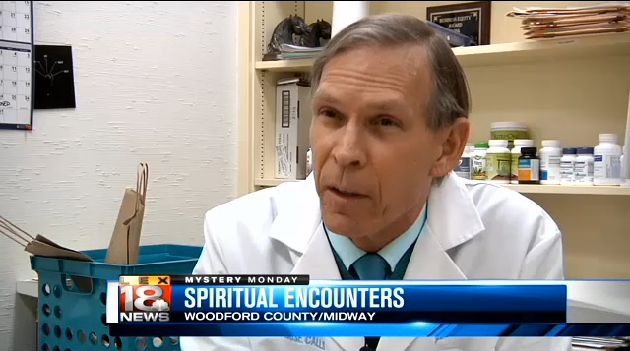
Jim responded and then said: "I have 23 patients with near death experiences and 100 more that shared spiritual stories. Intend to explore a book sharing those stories later; they have changed my perspective on life."
I said, "Do you have a publisher for your book? I am the owner of a book publishing company, RRP International Publishing. We are extremely selective in who we add as an author, but your book idea is a winner and one we would be interested in."
As Humphrey Bogart said, "that was the beginning of a beautiful friendship."
2015-04-25-1429983868-6008114-jimonnews.png
Move up the clock to April 1, 2015.
I got on the scale and weighed 295 pounds. Eighty-two pounds lighter than the day I wrote that email. The first time since Bill Clinton was president that I have weighed less than 300 pounds.
I no longer have diabetes, I walk a couple of miles a day, my blood pressure is 120/70 and I have more energy than any time in my adult life.
Dr. Jim put the forces in play to make that happen.
On that same day, April 1, you could look at the Amazon bestseller list.
The number one bestseller in Holistic Medicine was God's House Calls by Dr. Jim Roach. The number one best-selling new release in Alternative Medicine was God's House Calls by Dr. Jim Roach. The number one best-selling hot new release in Healing is God's House Calls by Dr. Jim Roach.
The book was number one in four categories and on the top bestseller lists in numerous other categories including Health, Fitness, Dieting, Professional and Technical books. It was barely out of the top 100 in the overall nonfiction category.
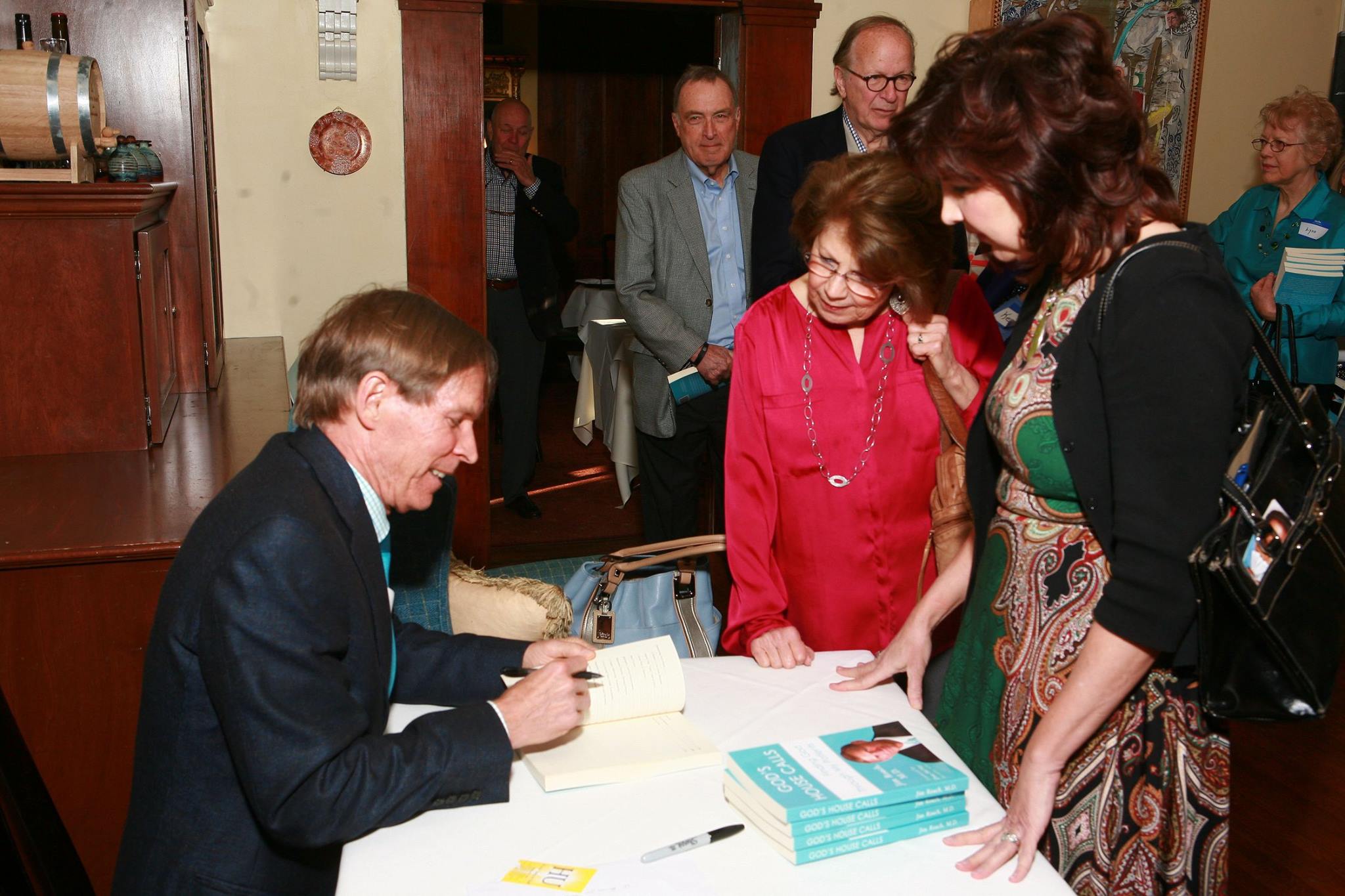
The previous night, Dr. Jim had an invitation only, kickoff event for his book that drew over 400 people and packed every nook and cranny of the historic Holly Hill Inn.
Dr. Jim Roach, a first time author in tiny Midway, Kentucky, wrote a book that is an absolute monster success.
2015-04-25-1429983977-6457381-11084004_1541289792758292_3250452676633565698_o.jpg
Unlike most people, including myself, Dr. Jim is not motivated by fame, glory or money. He is giving all of his proceeds of the book to charity. Jim wrote this book because he has a heartfelt message and wants to touch as many people as possible. Nothing more, nothing less.
If you have ever been one of Dr. Jim's patients, you know that healing is what he is all about. I've heard from so many people who have told me that "Dr. Jim saved my life" that I start to think that the miraculous is commonplace.
The whole concept of miracles is something that I am still getting my arms around. I had major ones happen in my lifetime, but the first time I ever shared them in public was when I wrote the forward to Jim's book.
I would have to define my faith and spirituality as extremely shaky on the July 15th day when I woke at four a.m. to write an email to Dr. Jim. To quote Harry Truman, I thought that "people who pray the loudest are the ones you lock your henhouse from," and I was as disconnected from prayer and the spiritual world as I could get.
That changed. Being around a man like Dr. Jim Roach rubs off on you. He is such a great role model that you want to live your life the way he is living his. And you want to pray for others, just like Jim has prayed for you.
The people Jim writes about in the book had very obvious miracles occur in their lives. What happened on July 15, 2014 was truly a miracle, but it takes some reflection to figure it out.
I got up in the middle of the night and sent an email to a doctor I had not seen in a couple of years. He responded by offering to help me, but also mentioned that he wanted to write a book, even though he had never written one before. I immediately responded that I knew it would be a hit and that I wanted to publish it.
The book is a hit and making a huge difference in people's lives. I got a chance to be "reborn" in both a physical and spiritual sense. All as a result of that one email.
I know about probability. My father was a professional gambler and I have written several books about lottery winners. The odds of the July 15 sequence of events occurring would have to be a trillion to one.
2015-04-25-1429984206-4985287-11110055_1541289466091658_6375795795806918370_o.jpg
So to answer the Al Michaels' question, "Do you believe in miracles?"
My experience with Dr. Jim tells me that they have occurred in my life.
I'm not the only person in Dr. Jim's life who has experienced a miracle. Roach discusses over two hundred different situations in his book, where people had messages from the dead or near death experiences.
Since the book has been released, Dr. Jim and our publishing office have received at least 200 more people who want to share their own stories or were inspired by Dr. Jim's book.
During the course of the time that I have worked with Jim, he and I have developed a close friendship. What I particularly admire is his courage.
It would have been easy for Jim not to write the book or to pick a safer topic, like his expertise in alternative and holistic medicine. Spirituality is not a topic that everyone wants their doctor to talk about.
Jim approaches the topic from a medical perspective. He wants people to not be afraid to talk about their spiritual experiences and not to have a fear of death. His book gives valuable evidence about the afterlife being a good place.
And that living in this world without fear produces a better quality of life.
The book is a fascinating read. Many people report that they will read the book in a day or so and purchase several copies for their friends and loved ones. It is definitely a book with a message.
From a man who has a lot of interesting things to say.

5 Reasons To Stop Whining About Your Age


2015-04-20-1429551586-1740033-crygirlbirthdayhat.jpg


My friend is moaning and groaning about turning 50. I finally got tired of her complaints and told her to pull up her control-top, big-girl panties and get over it. When she continued to bemoan the fact that her gumption had no function, I asked if she would prefer to drop dead at age 49. She slumped away under a self-imposed cloud of doom.
Another friend sniveled, through dramatic tears, that she was so insignificant she could stand naked in the middle of town with her hair on fire while dollar bills flew out of her saggy butt and no one would notice. For her, age 50 was a dark symbol of declining physical and mental deterioration. I assured her I would notice the free money.
"That's aging," I told her. "Embrace the glory, and pass the cake."
2015-04-20-1429551675-8923582-50thbirthday.jpg
That may seem harsh, but many of us seasoned women are weary of some women's wretched wailing about getting older. Let's evaluate the options so we can stop the pity party and get on with a raucous celebration of life.
Reality: You're Older. Your skin will wrinkle like a pricked balloon, boobs will drop to your waist, dot-to-dot spots will appear on your arms, hair will turn thin and gray, and you'll wave at someone and your arm will continue to flap for five minutes. Your volatile intestines will keep you guessing if you'll be constipated for a week or running to the bathroom every hour, and you'll exercise regularly just to maintain the weight you don't like. You'll endure hot flashes, mood swings, and hairy toes and forget your keys while caring for aging parents and rambunctious grandkids.
But wait, there's more! Here are other fun facts to anticipate: Your children will ignore you until they need something, your family will count how many glasses of wine you guzzle at dinner, and they'll mutter about your problem. Meanwhile, you're bombarded with advertisements that scream at you to buy anti-aging products even though you're older than some trees in the forest. Older women are the fodder for jokes about menopause, mothers-in-law, and incontinence, while crotchety, older men are revered as distinguished and successful. Get used to it.
Reality: You Can Choose to be Liberated. Consider the advantages of aging past 50. The kids are grown and moving away, so you'll have less laundry, meal expense and preparation, and no more frantic nights waiting up for them to come home. You won't need to purchase feminine products after your period stops. You'll have more time to pursue hobbies and/or your lover, volunteer, travel, or read books. And, you have the power to throw away all the silly "Over the Hill" birthday cards and party favors. Being over the hill means you get to tumble down, laughing all the way.
2015-04-20-1429552338-8799330-happysadjesters.jpg
Here are five reasons to stop whining about your age:
1. There is nothing you can do about it. If you were born during or before 1965, you're approaching or over 50. That's how it works, and there are no exceptions. Unless you die.
2. There always will be others younger and older. If you're not the world's oldest living person, you will know people of all ages. Share your stories, and encourage each other on your journeys. I've gleaned great facts from toddlers and old folks.
3. You're a living resource manual. You existed before the inventions of cell phones, personal computers, microwaves, social media, instant rice, and tampons. The younger generations can learn a lot from you.
4. Others died too young. I read obituaries and have noticed that many of them describe people younger than I am. You and I got to wake up today. That's a positive affirmation that we get another chance to save the world.
5. Youth is overrated. Really, would you go back to your 20s or 30s? I'd love to look like I did but I don't want to relive the challenges, heartache, worries, and exhaustion of those years. I'll stick with being feisty over 50.
by

Allies Are Not Like Facebook Friends: US Should Drop Useless and Dangerous Alliances


FACEBOOK UNFRIEND


If America ends up at war, it almost certainly will be on behalf of one ally or another. Washington collects allies like most people collect Facebook "friends." The vast majority of U.S. allies are security liabilities, tripwires for conflict and war.
Perhaps even worse, American officials constantly abase themselves, determined to reassure the very countries which the U.S. is defending at great cost and risk. Indeed, America's most hawkish politicians, who routinely posture like reincarnations of Winston Churchill, routinely talk of sacrificing U.S. lives, wealth, and security for the benefit of other nations. For instance, Sen. Marco Rubio (R-Fl.) recently worried, "What ally around the world can feel safe in their alliance with us?" The more relevant question should be with what ally can America feel safe?
Instead of relentlessly collecting more international dependents, Washington policymakers should drop Allies In Name Only (AINOs). The U.S. should return to a more traditional standard for alliances: Join with other nations only when doing so advances American security. Alas, that rarely is the case today.
Indeed, contra the scare-mongering of hawkish politicians such as Sen. Rubio and his GOP compatriots, the strategic environment today is remarkably benign for the U.S. The world is messy, to be sure, but that's always been the case. The number of big conflicts is down. More important, America faces no hegemonic threat or peer competitor and is allied with every major industrialized state other than China and Russia.
All of Washington's recent wars have been over -- from America's standpoint -- unimportant, indeed, sometimes frivolous stakes. The Islamic State, Libya and Iraq were regional problems for U.S. allies with minimal impact on America. Iran and North Korea are ugly actors, but mostly for Washington's dependents. The two would face destruction if they attacked America. The latest crisis du jour, Yemen, worries Riyadh but is not even a speed bump for the globe's sole superpower. Yet Washington now is involved in another sectarian proxy war through its totalitarian "ally" Saudi Arabia.
Terrorism remains a genuine threat, but falls far short of the sort of existential danger posed by the Soviet Union during the Cold War. Worse, terrorism typically is a response to foreign intervention and occupation. Washington has inadvertently encouraged terrorism by backing authoritarian regimes, joining foreign conflicts, and creating enemies overseas. America has done some of the worst damage to itself when protecting the interests of allies -- fighting their wars, killing their enemies, backing their campaigns, advancing their interests.
Adding unnecessary allies obviously makes this problem worse. In Ukraine, for instance, the Obama administration is under pressure to treat a non-ally as an ally -- arming and/or defending Russia's neighbor -- which would yield a proxy war with Russia, a nuclear-armed state which considers border security a vital interest. Bringing Ukraine (and Georgia) into NATO would be even more dangerous, inviting a geopolitical game of chicken over minimal stakes. Neither country has ever been considered even a marginal security concern of America. In contrast, both were long ruled by Moscow, which sees their links to the West as a form of encirclement, capping the extension of NATO up to Russia's borders.
Of course, both nations have been treated unfairly and badly by Moscow. But that doesn't justify a military alliance with the U.S. Alliances should be based on interest, not charity. They should not be an end, an independent security interest, but a means to an end, to protect America. Adding troubled states with limited military capabilities and unresolved conflicts turns the purpose of alliances on their head.
The U.S. long eschewed alliances and other "foreign entanglements," against which George Washington had warned. Even in World War I, a foolish imperial slugfest of no concern to America, Woodrow Wilson brought in the U.S. only as an "associated power." Popular and congressional opposition then prevented Wilson from guaranteeing the allied powers' post-war territorial seizures. Nevertheless, Washington's involvement was a catastrophic mistake, making possible the Versailles Treaty, which turned out to be only a generational truce before the combatants returned to fight a second and far bloodier round.
The extraordinary circumstances of World War II led to a genuine and justifiable alliance. During the Cold War the U.S. created what were intended to be temporary alliances. This policy was justified by the vulnerability of America's war-ravaged friends and hostility of the great communist powers, China and the Soviet Union. But even Dwight Eisenhower warned against turning the Europeans into permanent dependents. It makes no sense for Washington to retain responsibility for defending a continent with a larger economy and population than America -- and vastly greater resources than its only serious potential threat, Russia.
Much the same has happened in Asia, which Washington filled with allies after World War II. Even as Japan became the world's second economic power Tokyo relied on the American military. South Korea now has 40 times the GDP and twice the population of the North, yet Washington is responsible for the South's defense.
The problem is not just wasted resources, but tripwires for war. Alliances deter, but they also ensure involvement if deterrence fails, as it often does. And lending smaller states the services of a superpower's military changes their behavior, causing them to be more confrontational, even reckless. America and China aren't likely to come to blows over, say, Hawaii, which Beijing has no intention of attacking. But conflict could erupt over irrelevant allied territorial disputes, such as the Senkaku Islands and Scarborough Reef, claimed by Japan and the Philippines, respectively, and China.
Unfortunately, commitments to marginal allies determine basic U.S. defense strategy. Should America be prepared to fight one, one and a half, two, or more wars at once? These prospective conflicts invariably involve allies, not America directly. After all, what state can actually harm the U.S.? Other than Russia (and to a much more limited degree China) with its ICBMs, there is none. If war comes, it will involve Korea, Japan, the Persian Gulf, or Europe. The greater the number of dependent allies, the larger the number of possible wars. But when the interests involved are unimportant and the nations involved are capable of defending themselves, why is Washington sacrificing its people's lives and wealth for other states?
The U.S. should start defenestrating AINOs. Most of these nations would remain close. With all of them commerce should be free, culture should be shared, people should be friends, and governments should cooperate. In some cases military coordination may be called for, when the U.S. and other nations share vital objectives.
However, Washington should stop defending South Korea. With an overwhelming resource advantage, the South should deter North Korean adventurism and build cooperative regional relationships to preserve security in Northeast Asia. Despite historic tensions, Seoul should build ties with Japan, another American dependent which should transcend the past and create a military sufficient constrain a growing China. Washington should base relationships on equality rather than dependence.
The U.S. also should end its European defense dole. Today, NATO is effectively North America and the Others. Yet the Europeans collectively are wealthier and more populous than the U.S. They should take over NATO or set up their own alliance. No doubt there still would be important occasions for Washington to work militarily with these nations, which share history and values. But they, not America, should secure Europe.
Even more so the U.S. should not turn conflict-prone nations like Georgia and Ukraine into allies. Europe, not America, should protect the continent's eastern reaches and police North Africa, such as Libya. If the Europeans prefer not to pacify their neighborhood, Washington certainly shouldn't do so. Life might not be fair for Russia's immediate neighbors, but that's no reason to make them U.S. "allies."
Washington should be particularly wary about turning less important and less democratic states into allies. America's wars in Afghanistan and Iraq were misguided. Neither nation warrants a long-term security commitment or permanent military garrison. Pakistan and Saudi Arabia are at most "frenemies," which Washington should deal with as circumstances warrant. Americans should refuse to allow such nations to drag the U.S. into extraneous conflicts, like that in Yemen.
Washington still has an interest in preventing a hostile, hegemonic power from dominating Eurasia. But that possibility isn't likely for decades to come. Russia is a declining power, despite Vladimir Putin's pretensions. Europe is unlikely to ever marry economic strength with political unity and military power, let alone direct its resources against America. India must raise its people out of poverty before it will be ready to impose its will on the international system.
The People's Republic of China is most likely to become a superpower peer of America. However, the PRC remains relatively poor and faces enormous economic and political challenges. China is surrounded by states with which it has fought in the past -- and which remain interested in restraining Beijing's ambitions. The U.S. should watch warily, but act only if the PRC threatens far more than a border scrape with a well-heeled U.S. ally.
America has benefitted much from its relative geographical isolation. It rarely needed allies in the past. It requires even fewer allies today. When appropriate, Washington should cooperate with like-minded states to promote shared objectives. In the rare case, the U.S. should make an alliance to advance American security. But Washington should beware allowing the tail to wag the dog. Washington should create alliances to deter and win wars, not go to war to promote and preserve alliances.
Geopolitics is not a grand version of Facebook, with the objective of amassing as many "friends" as possible. While America's faux warriors see allies as another reason for promiscuous war-making, alliances instead should reduce the likelihood of conflict. Since most of Washington's military pacts endanger the U.S., America should be dropping, not adding, allies.

Why So Many Americans Feel So Powerless


UNEMPLOYMENT

A security guard recently told me he didn't know how much he'd be earning from week to week because his firm kept changing his schedule and his pay. "They just don't care," he said.
A traveler I met in the Dallas Fort-Worth Airport last week said she'd been there eight hours but the airline responsible for her trip wouldn't help her find another flight leaving that evening. "They don't give a hoot," she said.
Someone I met in North Carolina a few weeks ago told me he had stopped voting because elected officials don't respond to what average people like him think or want. "They don't listen," he said.
What connects these dots? As I travel around America, I'm struck by how utterly powerless most people feel.
The companies we work for, the businesses we buy from, and the political system we participate in all seem to have grown less accountable. I hear it over and over: They don't care; our voices don't count.
A large part of the reason is we have fewer choices than we used to have. In almost every area of our lives, it's now take it or leave it.
Companies are treating workers as disposable cogs because most working people have no choice. They need work and must take what they can get.
Although jobs are coming back from the depths of the Great Recession, the portion of the labor force actually working remains lower than it's been in over thirty years -- before vast numbers of middle-class wives and mothers entered paid work.
Which is why corporations can get away with firing workers without warning, replacing full-time jobs with part-time and contract work, and cutting wages. Most working people have no alternative.
Consumers, meanwhile, are feeling mistreated and taken for granted because they, too, have less choice.
U.S. airlines, for example, have consolidated into a handful of giant carriers that divide up routes and collude on fares. In 2005 the U.S. had nine major airlines. Now we have just four.
It's much the same across the economy. Eighty percent of Americans are served by just one Internet Service Provider -- usually Comcast, AT&T, or Time-Warner.
The biggest banks have become far bigger. In 1990, the five biggest held just 10 percent of all banking assets. Now they hold almost 45 percent.
Giant health insurers are larger; the giant hospital chains, far bigger; the most powerful digital platforms (Amazon, Facebook, Google), gigantic.
All this means less consumer choice, which translates into less power.
Our complaints go nowhere. Often we can't even find a real person to complain to. Automated telephone menus go on interminably.
Finally, as voters we feel no one is listening because politicians, too, face less and less competition. Over 85 percent of congressional districts are considered "safe" for their incumbents in the upcoming 2016 election; only 3 percent are toss-ups.
In presidential elections, only a handful of states are now considered "battlegrounds" that could go either Democratic or Republican.
So, naturally, that's where the candidates campaign. Voters in most states won't see much of them. These voters' votes are literally taken for granted.
Even in toss-up districts and battle-ground states, so much big money is flowing in that average voters feel disenfranchised.
In all these respects, powerlessness comes from a lack of meaningful choice. Big institutions don't have to be responsive to us because we can't penalize them by going to a competitor.
And we have no loud countervailing voice forcing them to listen.
Fifty years ago, a third of private-sector workers belonged to labor unions. This gave workers bargaining power to get a significant share of the economy's gains along with better working conditions -- and a voice. Now, fewer than 7 percent of private sector workers are unionized.
In the 1960s, a vocal consumer movement demanded safe products, low prices, and antitrust actions against monopolies and business collusion. Now, the consumer movement has become muted.
Decades ago, political parties had strong local and state roots that gave politically-active citizens a voice in party platforms and nominees. Now, the two major political parties have morphed into giant national fund-raising machines.
Our economy and society depend on most people feeling the system is working for them.
But a growing sense of powerlessness in all aspects of our lives -- as workers, consumers, and voters -- is convincing most people the system is working only for those at the top.

Sunday, April 26, 2015

MUNICH - DVD - Steven Spielberg - free shipping


MUNICH - DVD - Steven Spielberg - free shipping
Time left : 2w 2d 20h
Price : $ 5.15
Free shipping

[View Detail]

Leap Frog-Leapster-Disney/Pixar Cars Gaming Cartridge - NO CASE - free shipping


Leap Frog-Leapster-Disney/Pixar Cars Gaming Cartridge - NO CASE - free shipping
Time left : 3w 2d 16h
Price : $ 4.00
Free shipping

[View Detail]

Biden announces $9 billion in student loan relief President Biden on Wednesday announced another $9 billion in student debt relief. About 12...