'USA is falling apart': the multimillionaire who asks the richest to pay more taxes
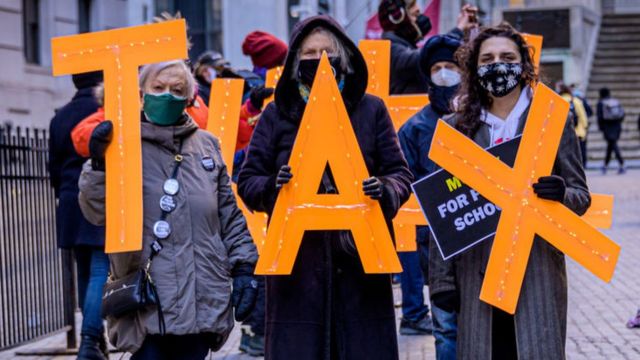
Amid the covid-19 pandemic, protesters urge US billionaires to pay more taxes
It may seem strange that a multimillionaire asks for more taxes.
In the United States, however, a group of tycoons formed the organization "Patriotas Millionaires" precisely to ask the wealthiest to contribute more to public revenue.
It is chaired by Morris Pearl, a former director of one of the largest investment funds in the world, BlackRock, who now lives off the profitability of his investments after a successful career on Wall Street.
Pearl argues that the United States should follow a path similar to that of Argentina and create a wealth tax to deal with the economic crisis generated by the covid-19 pandemic.
With the new measure, the government of Alberto Fernández said it plans to raise about $ 3 billion, which should be used to finance medical supplies and economic aid programs for families most affected by the crisis.
Tycoon Morris Pearl does not just support the creation of an emergency tax to mitigate the effects of the pandemic. He argues that the United States' tax system should be modified so that multimillionaires can make greater contributions - permanently - to the public coffers, especially now that the stock exchange is in a period of historic highs.
"In the past 10 months, I've made millions of dollars" in the midst of one of the worst economic crises in decades, says Pearl. So he believes that he and the other millionaires who have made big profits should pay a tax on their fortunes.
Below, check out Pearl's interview with BBC News Mundo, the BBC's Spanish-language service.
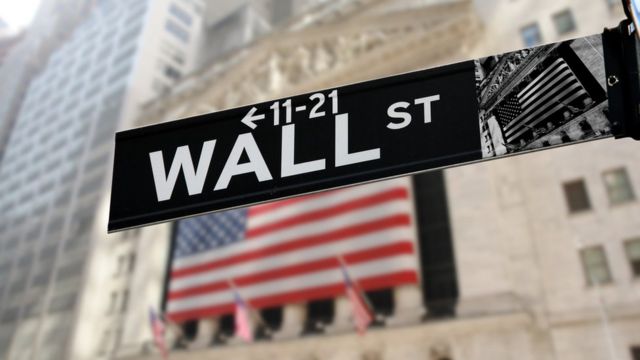
Recently, stock markets reached historic highs amid a euphoria that contrasts with the brutal economic effects of the pandemic on the population
BBC News Mundo - Why did you write that the USA should follow the example of Argentina and pass a tax on large fortunes?
Morris Pearl - Here in the United States you only pay taxes on your income, not on your wealth.
Really wealthy people should pay a tax on wealth. That is why I say that the United States should copy Argentina and pass a tax on the richest.
BBC News Mundo - What level of wealth are we talking about?
Pearl - From people who made millions and millions of dollars during this crisis, like Jeff Bezos, the founder of Amazon. He hardly pays taxes, because he has no income that is understood as a salary.
He does not need to be paid a salary because he is a multimillionaire. Billionaires, who have greatly increased their fortunes, should also pay taxes.
Those who are really rich are not paying a lot of taxes.
In this country, some people got along very well. The stock market is at its historic peak. Bankers and lawyers who work from home are doing very well.
But other people, who work in restaurants, hotels or airlines, are in trouble. Many have lost their jobs, are unable to pay their rent and this, at the same time, causes problems for the owners of these establishments and the places where these people buy (their inputs).
There is a great divide between those who have and those who do not.
Pearl asserts that a tax increase to the wealthiest in the United States would only affect a few hundred people
BBC News Mundo - How much has inequality grown due to the economic crisis caused by the new coronavirus?
Pearl - I don't have statistics, but I think it has increased a lot. Some people have become extraordinarily wealthy.
I haven't worked for many years, I only do volunteer work. However, I am still richer now than when I retired.
I made a lot of money last year even without working. But here in New York there are many unemployed people and there is more social inequality now than there was a year ago.
BBC News World - How much richer did you become during the pandemic?
Pearl - In the past 10 months, I have made millions of dollars.
BBC News Mundo - Let's go back to Argentina. When this tax was approved, which will be collected only once from the richest, there was strong opposition from businessmen, who criticized the measures for taxing productive wealth. They say that this tax affects new investments and, therefore, the creation of jobs and the reactivation of the economy. What's your opinion?
Pearl - For the United States, we are proposing that taxes be raised for those who have wealth greater than US $ 1 billion. This is a limit about 400 times higher than the value established in Argentina.
Much of wealth can be seen as productive wealth, in one way or another. I have shares in Amazon and, for example, we could say that this is productive wealth because it produces something, but there is no reason why I don't have to pay tax on the huge increase in my fortune last year.
In the end, any wealth can be productive, depending on how you define it. What we propose is to tax wealth starting at US $ 1 billion.
We are talking about the richest, who represent a few hundred people.
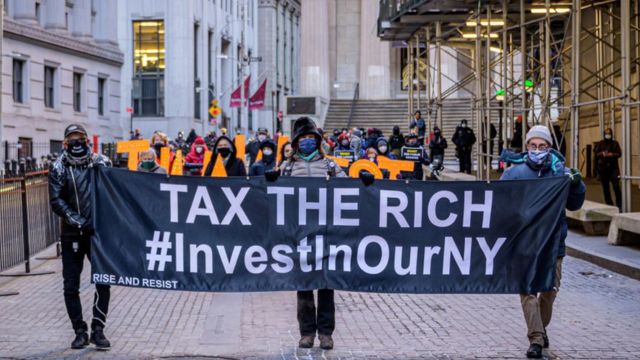
During the Donald Trump administration there was a tax reform that reduced taxes
BBC News Mundo - But in Argentina some businessmen say they had to sell machines to pay the tax. I mean, we're not just talking about those who are very rich ...
Pearl - In Argentina, they taxed 2% of a person's assets from a certain amount.
Whoever has to pay this tax gets the other 98%. So it seems good to me that the very rich keep 98% of their fortunes.

Big fortune tax was one of the most debated issues before the US elections
BBC News Mundo - We are talking about a tax ranging from 2% to 3.5% that was promoted by a government considered to be left. Do you believe that in the United States such a measure would have political support in Congress?
Pearl - It is difficult to know. Some support does exist. Within the Democratic Party there is a wide spectrum of political positions, some more to the left and others more to the center. The truth is, I don't know what's going to happen politically.
We are very motivated to apply some tax to wealth, but I don't know if there would be enough support in Congress to pass such a law.
BBC News Mundo - What exactly is your proposal for the United States and how much could be raised?
Pearl - The tax would have to be paid by a few hundred people. Regarding how much money could be raised, I don't think it's the most important.
Unlike Argentina, the United States issues dollars, which allows us to have a margin of budget deficit. I'm not so concerned about how much money we could get. I am more concerned that we have growing inequality.
At the end of 2017, the tax system was changed and this worsened inequality (during the period, during the Donald Trump administration, there was a tax reform that reduced taxes and favored companies). That is why I believe that we have to change course and the richest need to pay more taxes than the average citizen who works to live.

In New York and other US cities, several actions have been organized to help those most affected by the economic crisis
BBC News Mundo - Those who oppose the creation of a wealth tax often argue that Europe is the best example of the failure of this tax, since in the 1990s, 12 countries had this tax, and now only three continue: Switzerland , Norway and Spain. And the reason for the failure, experts say, is that the rich took the money to other countries to avoid this tax ...
Pearl - I don't think people are going to leave the United States. People who live here and pay taxes feel safe here. This is a safe country compared to other nations.
The situation is different from Europe. As the European Union exists, it is easier to transfer money from one country to another. And those who have a fortune in the United States, in general, pay less taxes than in other European countries.

In different cities in the United States, volunteers share boxes of food for those who are suffering from the worst effects of the current crisis
Well, anyone who wants to pay less taxes can live in Zimbabwe, for example, but I don't think they want to live there.
Paying taxes is exactly what allows you to live in a country like the United States.
BBC News World - In the UK debate over the creation of a single wealth tax to tackle the economic effects of the pandemic, some say it could open the door to raising other taxes. What do you think about that?
Pearl - We are not proposing a one-time tax in the United States. We are proposing that multimillionaires pay more taxes permanently.
That would affect one person in a million.
BBC News Mundo - What do you think of the idea of increasing corporate taxes, not just personal wealth?
Pearl - Yes, we also agreed to raise taxes on companies. In our organization, Patriot Millionaires, we are concerned with big companies that say their profits are in other countries with lower taxes, like Ireland, for example.
BBC News Mundo - Some people criticized you, saying that your stance on taxes is quite cynical, because now that you are retired you advocate raising taxes, but you never did that while working on Wall Street. Why didn't you do that before?
Pearl - I have been defending this for the past 10 years. Before, when I worked, I earned money from the wages Wall Street companies paid me.
What has changed is that now all the money I earn comes from my fortune. These are the profits I make from my investments. That is why a fortune tax would affect me much more now than before, when I was working.
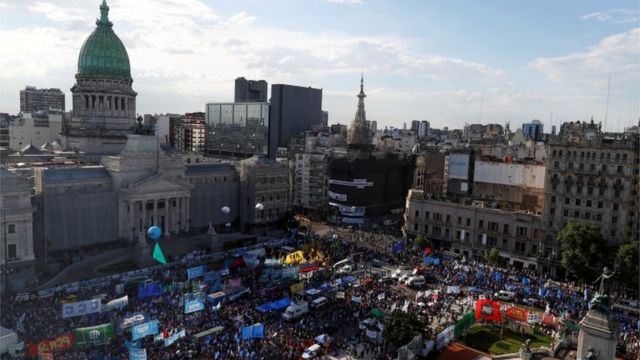
In Argentina, a wealth tax was approved last December, which will be applied only once, to mitigate the economic effects of the pandemic.
BBC News Mundo - As you well know, there are multimillionaires who have no interest in reducing inequality, who have no action to try to circumvent this scenario. How do you convince these people that they should pay more taxes?
Pearl - What I am saying is that our country is falling apart. We have people protesting in the streets and we have riots. The reason behind the protests is enormous inequality. It is not the country where they want to live.
If inequality worsens, it makes it difficult for the country to be attractive for investments. I tell my wealthy friends that they should also be in favor of reducing inequality, because we have a very divided country and that is not a characteristic of a good place to have your family and make investments.
The best places to invest are those with a strong middle class, not a place filled with poverty.
- BBC World News


No comments:
Post a Comment