'Citizen Kane': 4 reasons why the film is considered by many to be the best in history
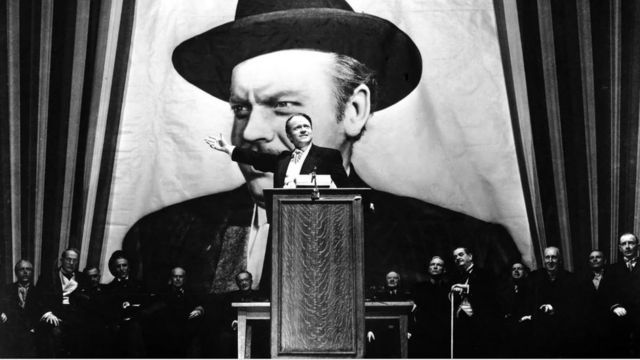
The film is inspired by the life of press mogul William Randolph Hearst
It was considered by many for decades as the greatest film of all time: a delusion of ingenuity and creation, a master class of cinematographic technique, structure and narrative.
Citizen Kane , Orson Welles' first film, was not, however, well received at the time.
He barely managed to recover the budget spent on his production, and the negative publicity in the press, as a result of his theme, followed him for years as a curse.
And despite the many nominations he received, he won only one Oscar at the 1941 ceremony: for best script.
Directed by David Fincher for Netflix, Mank tells the battle of Herman J. Mankiewicz (Gary Oldman) against alcoholism, health problems and memory as he isolates himself on a ranch to finish his life's work, the film that little to little, as he will discover, will be his swan song, and also, the one that will render him a place in history.
Mank is above all a tribute to Mankiewicz, the man who has often been left out of the cinema books in the face of Orson Welles' overwhelming personality and ingenuity.
But what is special about Citizen Kane ? Why hasn't the film lost its charm, despite the years that have passed? Why is it still worshiped in universities, movie theaters and film buffs around the world?
1 - Mankiewicz's revolutionary script
One of the big questions in the history of cinema is how much Mankiewicz had to do with the final edition of Citizen Kane and how much Welles participated in the original script.
Whatever the influence of one on the other, the film proposed one of the most revolutionary - and bold - dramatic structures that cinema history had ever seen.
Citizen Kane focuses on the life of Charles Foster Kane (played by Welles), a press magnate who has enormous fortune and influence, but who does not reach the political office nor the love he craves.
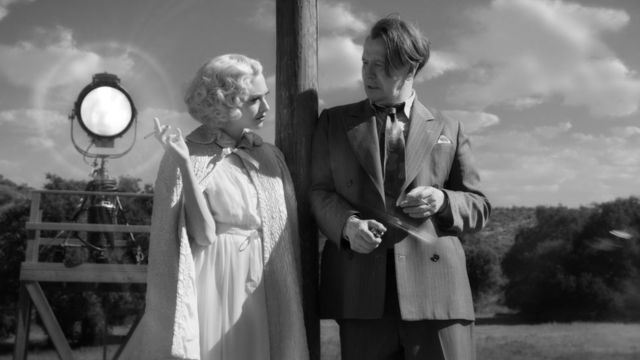
Amanda Seyfried and Gary Oldman are among the protagonists of 'Mank'
It is a fictitious version of the figure of the press magnate William Randolph Hearst, who, incidentally, played an essential role in trying to make Citizen Kanefall by the wayside.
But, instead of being a conventional biographical film, the work of Welles and Mankiewicz is a puzzle that brings together various narrators, perspectives and leaps in time.
It also has a collection of memorable phrases for its wit and offers a strong view of the style and inner world of its main character.
But this is not an academic manual of technique and structure: Citizen Kane'sscript has more to offer as entertainment than as a style manual.
2 - Subversion of cinematographic genres
The film featured a game with cinematographic genres hitherto unheard of - and which, over the years, has made it almost unclassifiable.
At first, some defined it as a "mystery drama", but grouping all the genres it encompasses is complicated.
The plot begins with the pessimistic chords of a Bernard Herrmann theme. You can see the irregular silhouette of a castle at the top of a hill with fog. We are in the territory of gothic terror. The castle might as well have been owned by Count Dracula.
Then, we slid into the castle through a strange setup: a snowstorm, a snowball, up to Kane's mouth as he sighed his last word: "Rosebud".
Two minutes later, the work is no longer a horror film, but a surreal experience worthy of Salvador Dalí and Luis Buñuel. But not much.
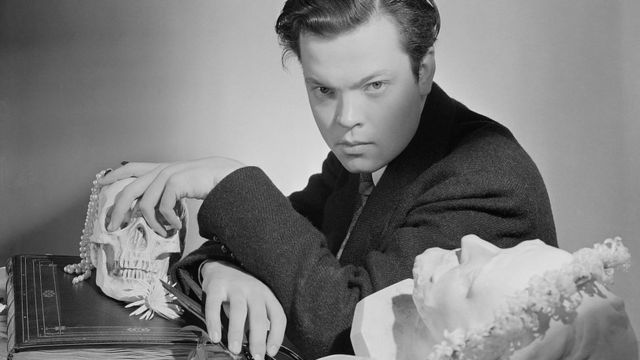
Orson Welles was 24 when he started filming 'Citizen Kane'
A few seconds later, Citizen Kane turns into a newscast that runs through Kane's biography and shows us Xanadu, his monumental property in Florida (along the lines of Hearst Castle in San Simeon, California).
However, when we are adapting to the fake documentary, the film changes again
It has a Dickensian flashback of Kane's rural childhood in 1871. And then we move on to a comedy of customs while Kane takes control of the New York Inquirer. Later, the film turns into a political drama, then a backstage hoax, and finally a dark melodrama ...
And, linking the different genres, there is a detective story about an investigative reporter trying to figure out what Rosebud could mean.
Never before in the history of cinema had such narrative complexity been seen.
3 - A revolution in the technique of cinema
In 1946, a historian of French cinema, Georges Sadoul, classified Citizen Kane as "an encyclopedia of ancient techniques" and, although he tried to minimize the importance of the film, he identified one of the secrets that allowed the work to transcend time.
The feat of telling such a complex story was accompanied by an equally disproportionate purpose: to play with the cameras, the lights, the approaches, in short with the rules that had dictated the rigid cinematographic laws of Hollywood until then.
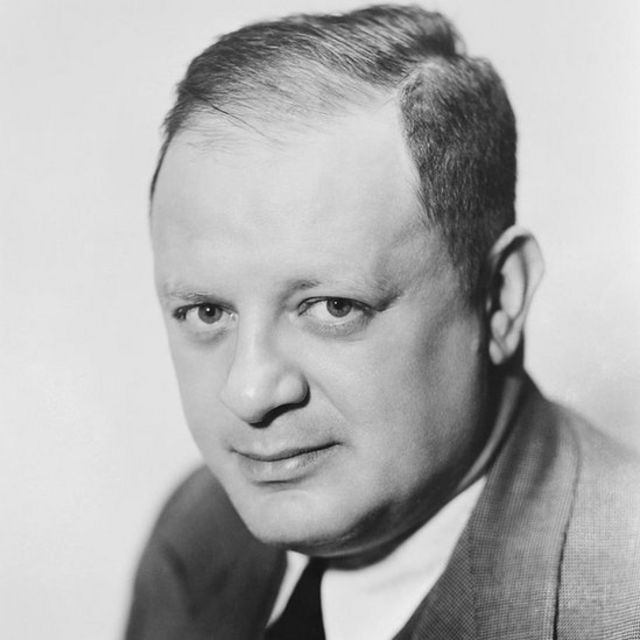
'Citizen Kane' was the last film that Herman J. Mankiewicz wrote
The film is an encyclopedia of techniques: a 114-minute film school that offers several classes on depth of field and rear projection, extreme close-ups and overlapping dialogues.
It is no wonder that film students love Citizen Kane . Watching the film is like doing an entire semester of cinema in a single afternoon.
This also prevented the film from being received in the same way by the general public, who at times may find it too pretentious.
4 - Orson Welles' creative genius and youth
Perhaps one of the reasons why the film is so vibrant is due to the fact that its own director was also learning to make cinema.
His first film was an attempt to revolutionize direction, just as he had tried to do on the radio during his stay in New York, especially with the 1938 adaptation of The War of the Worlds .
But if he was already a theater and radio star, Welles was not very aware of cinematographic techniques.
It is said that an assistant named Miriam Geiger had to make a manual of the different lenses and shots he could try.
Welles arrived in Hollywood with the promise of being able to make the film he wanted, without interference, something that today would be unthinkable.
However, he was soon hooked by the possibilities that cinema offered as a medium and used them all in Citizen Kane. A movie studio, he joked, was "the biggest electric train a child has ever had".
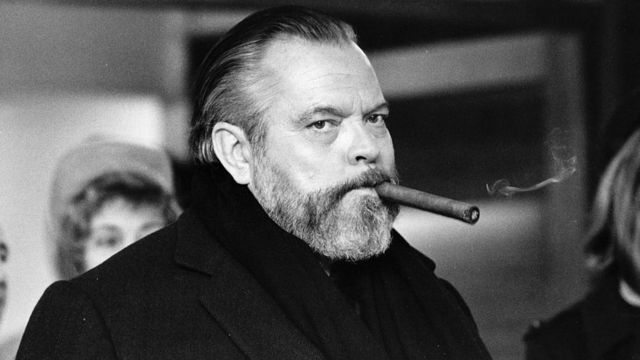
Welles never again had the creative freedom he got to shoot 'Citizen Kane'
Welles was able to impress in his first film a dynamism and a vitality that he was unable to repeat afterwards and that, perhaps, he did not repeat himself in the history of cinema.
No other reflection on failure, regret and the cruelty of the passage of time has ever had an exuberance as youthful as that of Citizen Kane .
Surprisingly, Welles was just 25 years old when his first film was released in theaters.
In an article in The New Yorker about Citizen Kane , Pauline Kael says that the success of the film is "the result of the discovery and delight of the fun of making Welles' films".
His real magic, however, lies in the way this delight comes and goes between the filmmaker and his subject.
Much of Citizen Kane speaks of a genius who boasts of his power and confidence, and is made by a genius who is also proud of his power and confidence.
Nowadays, no director new to his twenties would have complete control of a big project. And no novice director could come to Hollywood with Welles' naive ignorance and arrogance.
In 1941, Welles was a beginner and specialist, a graduate and a teacher. And, if he never again had unlimited freedom and energy to make another film like Citizen Kane, neither did anyone.


No comments:
Post a Comment