The two-decade hunt for billionaire wealth stolen by a political clan
- BBC News
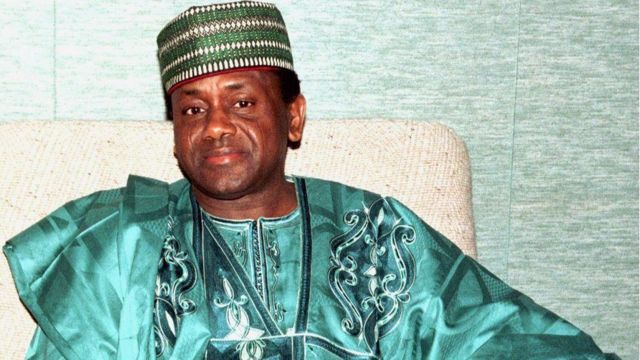
Sani Abacha became Nigeria's head of state after a military coup in 1993
In September 1999, Swiss lawyer Enrico Monfrini answered a phone call that would change his life.
"He called me in the middle of the night, asked me if I could go to his hotel, that he had something important. I said, 'It's a little late, but that's okay.'"
As a lawyer, Monfrini had built a Nigerian client base since the 1980s, working with coffee, cocoa and other commodities. He suspects that these customers have recommended him.
"He asked me, 'Can you arrange for this money to be returned to Nigeria?'
"I said yes. But in fact, I didn't know much about work at the time. And I had to learn it very quickly."
To begin with, the Nigerian police handed him the details of some Swiss bank accounts that appeared to contain part of the money Abacha and his associates had stolen, Monfrini wrote in the book Recovering Stolen Assets .
He says that a preliminary investigation published by the police in November 1998 found that more than $ 1.5 billion had been stolen by Abacha and his cronies.
How the scheme works
One of the methods used to accumulate such a colossal sum was particularly brazen: Abacha told an adviser to ask him for money for unspecified investments in the area of security. He then signed the order, and the consultant took it to the central bank, which would provide the money, usually in cash. Most of that money was then taken to Abacha's home.
This was just one of the ways. Another was to award contracts to friends at highly inflated prices and then either pocket the difference or require foreign companies to pay high fees to operate in the country.
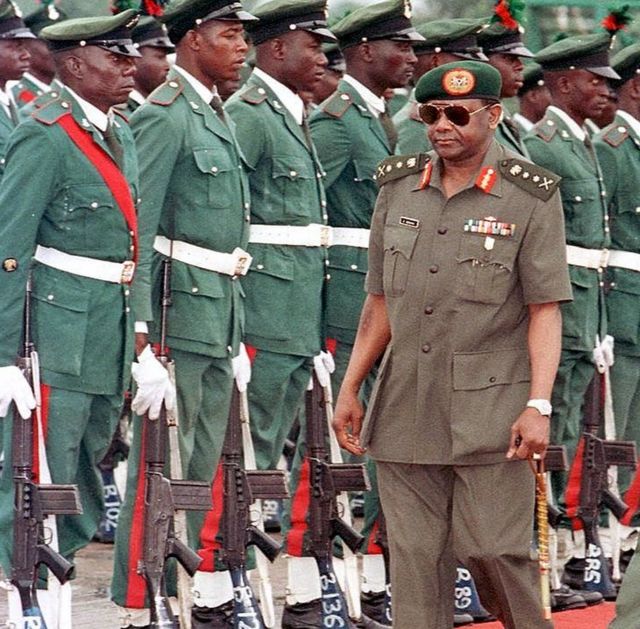
Abacha stole more than $ 1 billion pretending that money was needed for 'security'
This lasted for about three years, until everything changed when Abacha died suddenly, at age 54, on June 8, 1998.
It is not clear whether he had a heart attack or was poisoned because there was no autopsy, his personal doctor told the BBC.
Abacha died before spending the stolen money, but some bank records served as clues as to where he was hiding.
"The documents with the account history gave me some links to other accounts," says Monfrini.
Armed with this information, he took the matter to the Swiss attorney general. Monfrini successfully argued that the Abacha family and their partners had formed a criminal organization.
This was critical because it created more options for how the authorities could handle their bank accounts.
The attorney general issued a general alert to all Swiss banks demanding that they reveal the existence of open accounts with the names and pseudonyms of the Abachas.
"In 48 hours, 95% of banks and other financial institutions declared what they owned and that it seemed to belong to the family."
This would reveal a web of bank accounts worldwide.
'Bank accounts say a lot'
"We would find out in each account exactly where the money came from and / or where the money went to. Showing the intricacies of these bank accounts gave me more information about other payments received from other countries and sent to other countries," says Monfrini.
"So it was like a snowball. It started with a few beads, and then a large number of beads, which in turn created a snowball effect indicating a major international operation."
"Bank accounts and accompanying documents say a lot. We had so much evidence of different money being sent to and fro, Bahamas, Nassau, Cayman Islands - you name it."
The size of Abacha's network represents a great effort for Monfrini.
"Nobody seems to understand how much work this involves. I have to pay so many people, so many accountants, so many other lawyers in different countries."
Monfrini agreed to a 4% commission on the money sent back to Nigeria. A fee he insists was comparatively "very cheap".
Finding the money turned out to be relatively quick compared to returning it to Nigeria.
"The Abachas fought fiercely. They appealed to the courts about everything we did. This delayed the process for a long time."
Further delays occurred when Swiss politicians debated whether the money would be stolen again if it were returned.
Some money was returned from Switzerland after five years.
Monfrini wrote in 2008 that $ 508 million found in the many bank accounts of the Abacha family in Switzerland were sent to Nigeria between 2005 and 2007.
In 2018, the amount Switzerland returned to Nigeria reached more than $ 1 billion.
Other countries took longer to return the money. "Liechtenstein, for example, was a catastrophe. It was a nightmare." In June 2014, Liechtenstein ended up sending Nigeria $ 277 million.
Six years later, in May 2020, $ 308 million held in Jersey Island accounts was also returned.
This only happened after Nigerian authorities agreed that the money would be used specifically to help finance the construction of a bridge, expressway and road.
Some countries have not yet returned the money.
Monfrini still expects $ 30 million that he says is in the UK, $ 144 million in France and another $ 18 million on the island of Jersey. "But you never know," he says.
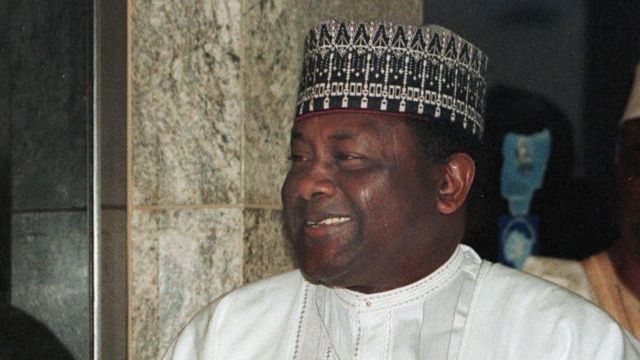
Abacha died suddenly at age 54
In total, he says his work secured a refund of just over $ 2.4 billion.
"In the beginning, people said that Abacha had stolen at least $ 4 billion to $ 5 billion. I don't believe that has been the case. I think we've already taken most, a large part of what they had."
He heard rumors that the Abacha family is no longer as rich. Or, as he says, "They are not swimming in money like they used to in the past."
When he looks back, he seems satisfied with his work. "We did what had to be done."


No comments:
Post a Comment