Vaccines against covid: mass immunization already points to drop in infections and hospitalizations in Israel
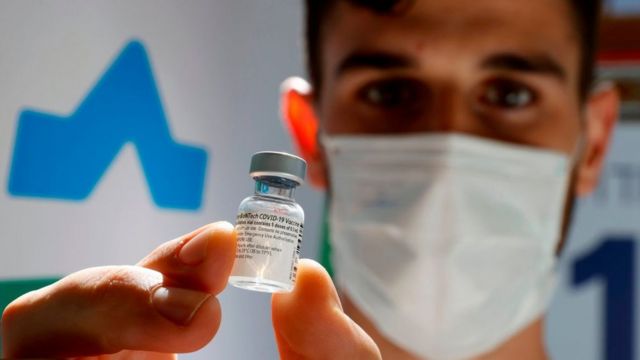
Israel's vaccination program is showing positive signs in reducing covid-19 infections and in total hospitalizations for the disease in the age group above 60 years.
The decline appears to be more visible in older people and in areas where immunization has advanced most.
This suggests that the vaccine is having an effect on public health, and not only the current lockdown imposed in the country, which reduces contact between people and, consequently, the number of contagions.
Figures from the Israeli Ministry of Health show that only 531 over 60 years of the nearly 750,000 vaccinees tested positive for coronavirus (0.07% of the total) after receiving doses of the vaccine, but with mild symptoms. The Ministry of Health assessed the medical records of nearly 1 million people in total - 743,845 of whom were over 60 - until at least seven days after receiving a second dose of the vaccine.
There have been three deaths in vaccinees over the age of 60, but it is impossible to determine whether they contracted the disease before receiving the immunizer or before their immunity had time to develop after the vaccine.
Before the vaccine had time to take effect, more than 7,000 infections were reported, just under 700 cases of moderate to critical illness and 307 deaths.
Data from the Ministry of Health suggest that infections fell consistently from 14 days after receiving the first injection onwards.
Delayed dose strategy

Israel adopted third lockdown against advancing coronavirus pandemic
Although the biggest drop observed was in people seven days after the second dose of the vaccine, it cannot be used as evidence for or against the strategy of sites that decided to postpone the second dose.
Israel has consistently given people two doses of the vaccine no more than three weeks apart, but the first dose is not expected to provide protection for at least two weeks after the injection.
Therefore, it is not possible, looking at these data, to unveil the impact of the second dose.
The first dose takes longer to show any effect, as it prepares the immune system to start recognizing and fighting the virus.
Israel distributed 5 million doses of the vaccine to a population of about 9 million people - and about 1 million people received two doses.
Research has yet to define whether the vaccine completely prevents people from carrying and transmitting the virus.
So for now, although many people remain unvaccinated, those who received the vaccine are still being instructed to maintain social distance and wear protective masks.
Is lockdown a relevant factor for these numbers ?
The Ministry of Health data only analyzed infections and diseases in vaccinated people - they did not involve a control group of unvaccinated people as a clinical trial would.
But a team of researchers from the Weizmann Institute of Science, Tel-Aviv University and Technion - Israel's Institute of Technology - tried to determine whether the drop in cases was due to the vaccine and not just the effect of the lockdown restrictions.
The researchers analyzed national data by age and by city.
They identified greater drops in infections and hospitalizations both in people over 60, who were vaccinated first, and in cities that vaccinated a greater proportion of people earlier.
These relative changes were not seen in previous lockdowns.
This gives positive signs that the falls may be related to the vaccine, and not just current restrictions.
Separately, Israel's second-largest health provider, Maccabi, published figures showing that 66 people in a group of 248,000 vaccinated (0.03%) contracted the virus more than a week after receiving a second dose of the vaccine.
Of these 66, all had mild symptoms and none were hospitalized.
Unlike the Ministry of Health, Maccabi compared the infection rate to 900,000 unvaccinated people with a similar demographic profile. In that group, during the same period, 8,250 became infected with the coronavirus - more than 30 times more.
They estimated that the vaccine was 92% effective when used in a population - very similar to the 95% announced by the pharmaceutical company Pfizer in a controlled clinical trial.


No comments:
Post a Comment