War in Ukraine: Poles open doors to more than 1 million refugees
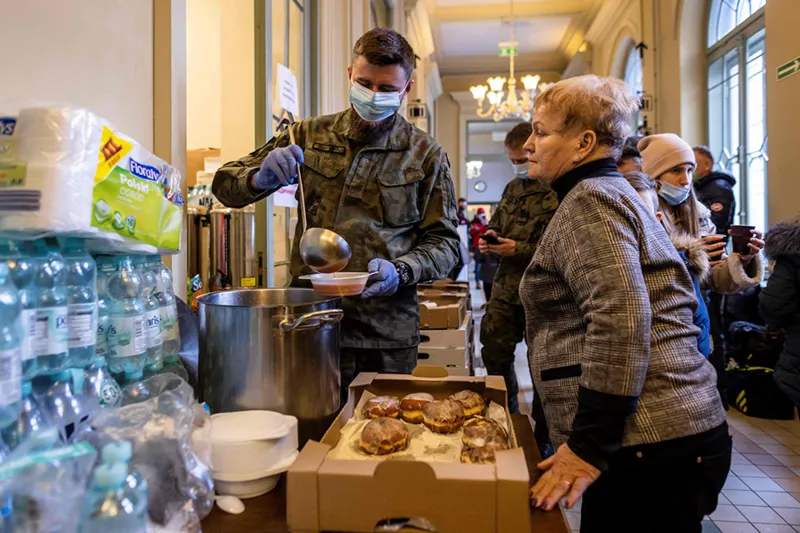
Soldiers and volunteers have been helping Ukrainians in the main train station building in Przemysl
Refugees from all over Ukraine are being welcomed by Poles as they arrive in the city of Przemysl, in Poland, on the border with Ukrainian territory.
There are, however, concerns about how the relief effort can be sustained if the war continues for long.
"We received 180,000 refugees in ten days," the mayor, Wojciech Bakun, told the BBC. "If it continues like this, by the end of the month we will have had half a million people coming in here."
Since the beginning of the Russian invasion of Ukraine, more than 1 million people have crossed the border with Poland to flee the conflict, according to the Polish Border Guard said on Monday (07/03).
At the crowded Przemysl train station, eight miles from the Ukrainian border, Wojciech Bakun is proud of what his town - with a population of 60,000 - is doing for Ukraine, but also apprehensive about what's to come.
The relief effort here relies on volunteers, who currently number in the hundreds. But can this be maintained for a long time? "Probably not," says the mayor.
"They're ready to do this for a week or two, maybe a month, not for a long time. So we're thinking long term and talking to international organizations about how to manage this if it goes on for longer."
mobilized families
In the station's main ticket room, people who have traveled long distances to Przemysl hold up pieces of paper and cardboard with written messages such as: "Shelter for eight in Gdansk"; "We can accommodate a family - Warsaw"; "40 seats available on buses to Germany".
Przemysl is an obvious highlight because it is on the main line across the border, with trains coming from Lviv in western Ukraine. They appear listed on the arrivals panel, but there is no longer any certainty about what is on the timetable.
Next to the platform where the trains from Ukraine arrive, I asked a Polish couple, Pawel and Magda, who they were waiting for. "A woman with three cats," they said.
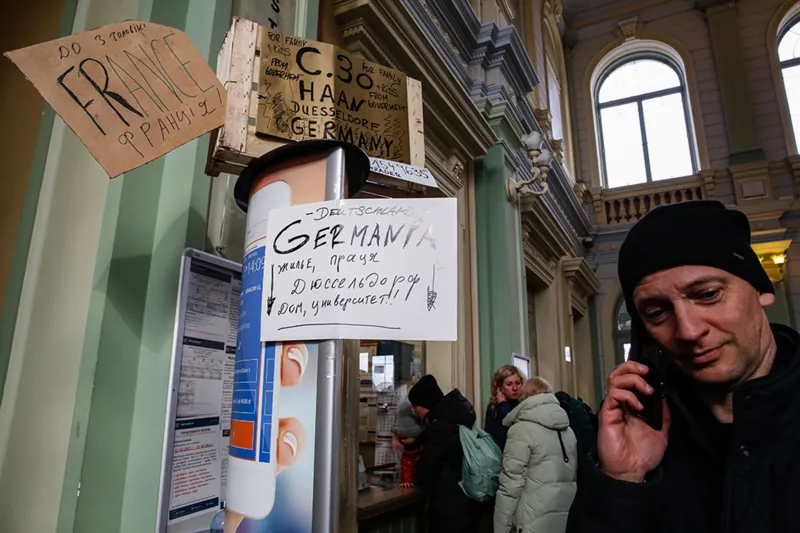
At the Przemysl station, several posters offer help to Ukrainian refugees
The two had seen a Facebook post from a Ukrainian woman living in Taiwan, desperate to find someone who could welcome her mother, Lyudmila, 75, and give her a bed for the night before she left.
Pawel and Magda have already been waiting for five hours. Did they know which train Lyudmila would come on? No, and the Ukrainian's phone was dead. How would they recognize her? Pawel took a paper out of his coat, with his name written on it, but said they'd be looking for someone with three cats.

Many Ukrainian refugees traveled with their pets.
End of Podcast
"For me, it's amazing to see how the Poles have been moved by the situation in Ukraine." Pawel's eyes filled with tears as he talked about why he and Magda were willing to stand at the station for so many hours, ready to welcome not only Lyudmila but others who might arrive with her.
Pawel is not the only one to have reacted this way: several people were moved when they told why they decided to open their homes and help in other ways.
There are long historical links that cross the border between the two countries, as well as family and linguistic links. Poles, however, also feel connected to this situation because they can imagine what it's like to be up against the Russians.
It's only been a little over 30 years since communism imploded in this country, and there are also older memories of the Soviet occupation. Furthermore, not everyone is completely confident that being part of NATO (North Atlantic Treaty Organization, the western military alliance), as is the case with Poland, is sufficient protection against Vladimir Putin.
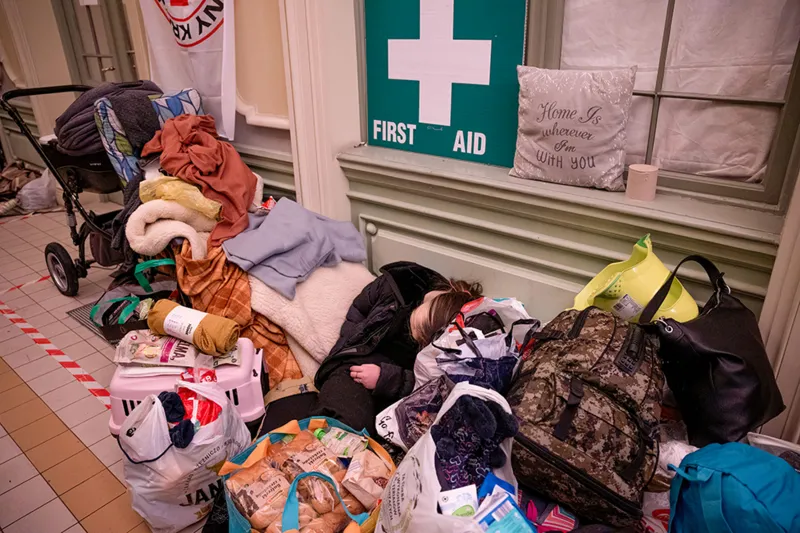
Exhausted refugees arriving in Przemysl end up sleeping in the train station
Even for Ukrainians who arrive here with a plan for where they want to go, there is a palpable sense of shock about the change in their circumstances. A woman in her mid-30s who was with her 10-year-old son Igor said she would like to go to Spain, but at this point she was panicking. It was getting dark. "We'll find somewhere to sleep and in the morning we'll think about what to do."
Ilona, who was standing nearby, was part of a larger group—her mother, aunts, cousins, and children. None of them had suitcases, just backpacks and carry-on bags, which as I could see carried food and toys.
"We wanted to be able to move around easily," she said. Ilona is just 22, a final-year medical student who doesn't know when or how she will complete her studies to become a doctor - and with her father still in Kiev, Ukraine's capital.
"People in Przemysl are warm," the mayor told me, and no doubt this has been shown in the residents' attitude toward Ukrainians. Last week, however, local police said there had been an attack on three African refugees by four people and another incident involving verbal abuse.

A special room at the station was prepared to welcome mothers with young children
The mayor said a disinformation campaign was to blame, with messages circulating suggesting that women in the city were at risk and that people should not leave their homes. Authorities are now urging everyone to remain calm, making it clear that there has been no increase in the number of violent incidents.
If Poles are thrilled, many Ukrainians are too. There's so much relief that they've managed to get to a safe place as thanks for what they find when they get here - the offers of transportation, accommodation, donations, support. In the spacious, high-ceilinged, gold-painted hall that used to be the station's café, someone had set up a small kitchen and a dollhouse in one corner.
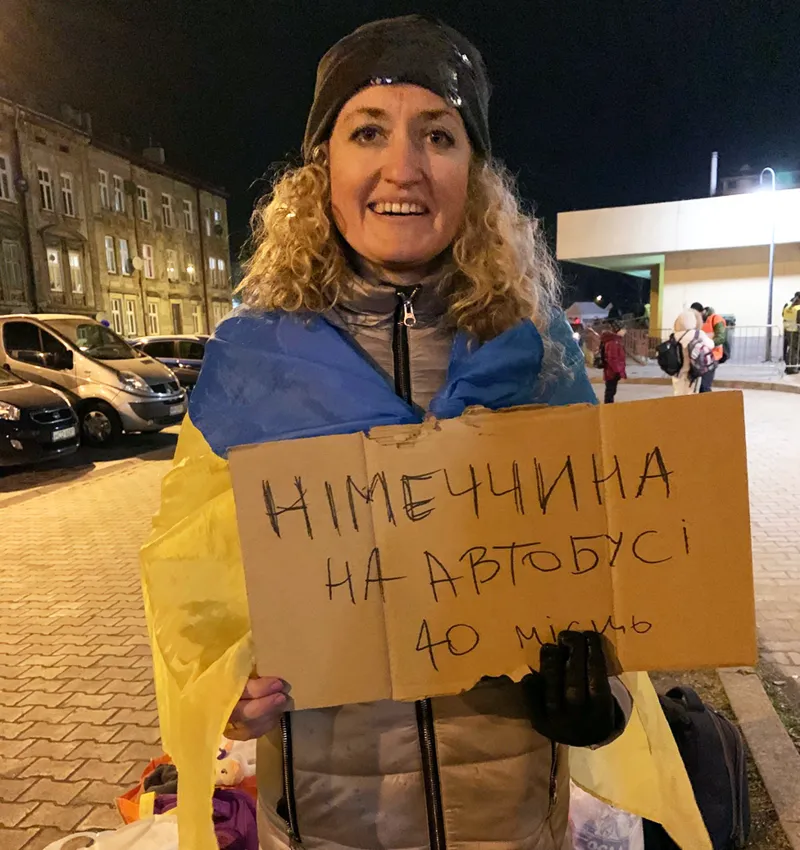
Look, who lives in Germany, came to Przemysl to pick up his mother and offer transport to others
Two newly arrived mothers with three children settled gratefully next to her, relieved to have something to keep the girls and little boy busy. However, as soon as the three of them are busy, and the women have a moment to themselves, I can see how haggard their faces are and how their heads are full of worry.
There is, however, a beautiful smile among those occupying the station. It's Olha's - Ukrainian, she's been living in Germany for years and came here to pick up her mother. With the Ukrainian flag on her shoulders, she holds a sign offering transportation to others who also arrive from the neighboring country.
"I want to tell you that out of my family, only my mother has decided to leave Ukraine," says Olha. "Everything else is staying to defend the country. And that's the end of Putin."


No comments:
Post a Comment